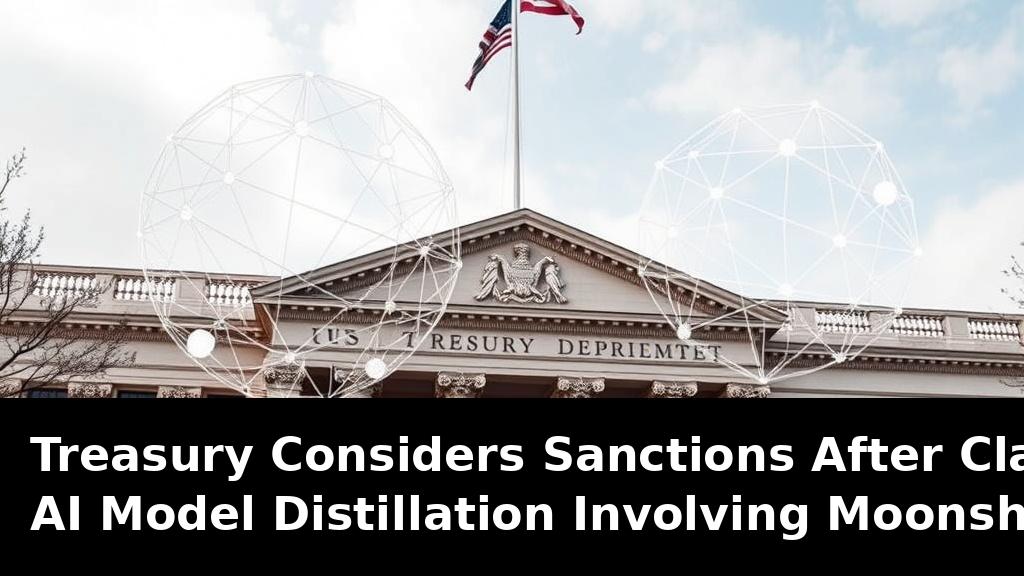
The White House has raised concerns that Chinese AI startup Moonshot may have used distillation techniques on Anthropic’s Fable model, prompting the Treasury Department to signal potential sanctions. This development adds another layer to ongoing tensions in the technology sector between the United States and China.
Distillation refers to a process where a smaller model is trained to replicate the behavior of a larger, more capable system. In this case, officials allege that proprietary elements from Fable were used without authorization. The Treasury’s threat of sanctions reflects a growing willingness to apply financial pressure on entities suspected of bypassing export controls or intellectual property safeguards in artificial intelligence.
The episode has also intensified a broader debate in Washington over the influx of Chinese open models. Policymakers are examining how freely available models from China could affect the competitive position of American AI developers. Some argue that open-source releases accelerate global progress, while others highlight risks related to security and attribution of training data.
One key context is the rapid expansion of Chinese AI capabilities in recent years. Companies like Moonshot have released models that compete directly with Western offerings, often at lower cost. This competition has led US regulators to scrutinize supply chains and partnerships more closely, especially those involving advanced chips and cloud infrastructure.
Another important angle involves the potential impact on international collaboration. If sanctions are imposed, they could restrict Moonshot’s access to US technology and talent, further fragmenting the global AI ecosystem. Industry observers note that such measures might encourage Chinese firms to accelerate domestic alternatives, reducing reliance on foreign components.
The situation also raises questions about enforcement mechanisms. Treasury officials would need to demonstrate clear evidence of distillation before implementing restrictions. This process could involve technical audits and cooperation with companies like Anthropic to verify claims.
As discussions continue in Washington, stakeholders from both the public and private sectors are watching closely. The outcome may set precedents for how future allegations of model misuse are handled across borders.